A Complete Guide for Beginners and Businesses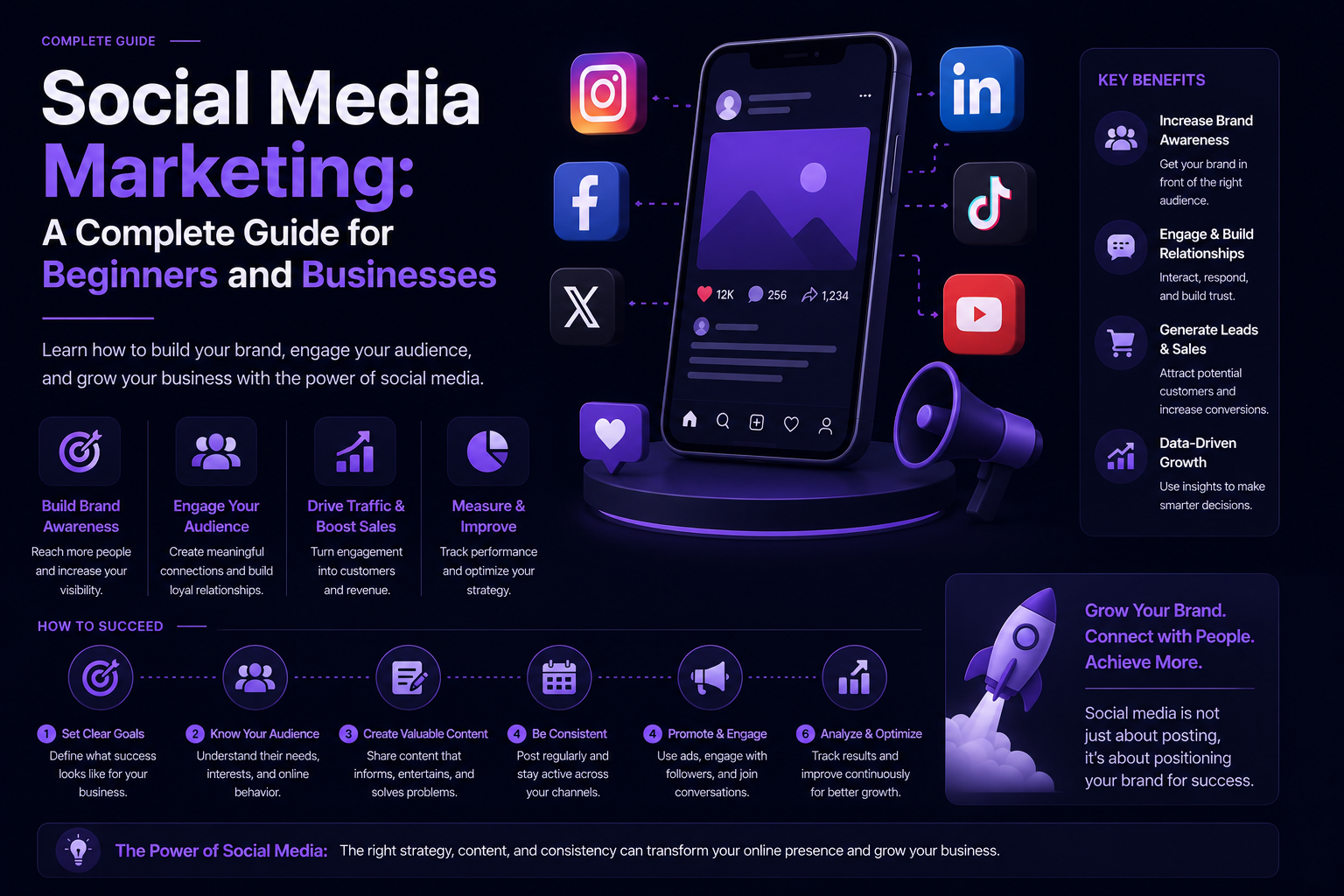
Focus Keyword: Social Media Marketing
Social media has become one of the most powerful ways for businesses to connect with customers, build brand awareness, and generate growth. From small local businesses to large companies, brands use platforms such as Instagram, Facebook, LinkedIn, YouTube, and TikTok to reach their target audience.
Social Media Marketing is not simply about posting pictures or videos. It involves creating valuable content, understanding your audience, building relationships, analyzing performance, and continuously improving your strategy.
In this complete guide, we will explore what social media marketing is, why it is important, its benefits, major platforms, effective strategies, and how beginners and businesses can use it successfully.
What Is Social Media Marketing?
Social media marketing is the process of promoting a brand, product, service, or business through social media platforms.
It includes activities such as:
- Creating and publishing social media content
- Building a community around a brand
- Engaging with followers
- Running social media advertising campaigns
- Promoting products and services
- Increasing website traffic
- Generating leads
- Monitoring social media performance
The main goal of social media marketing is to reach the right people with the right content at the right time.
Unlike traditional marketing, social media allows businesses to communicate directly with their audience. Customers can comment, share, ask questions, provide feedback, and interact with brands in real time.
Why Is Social Media Marketing Important?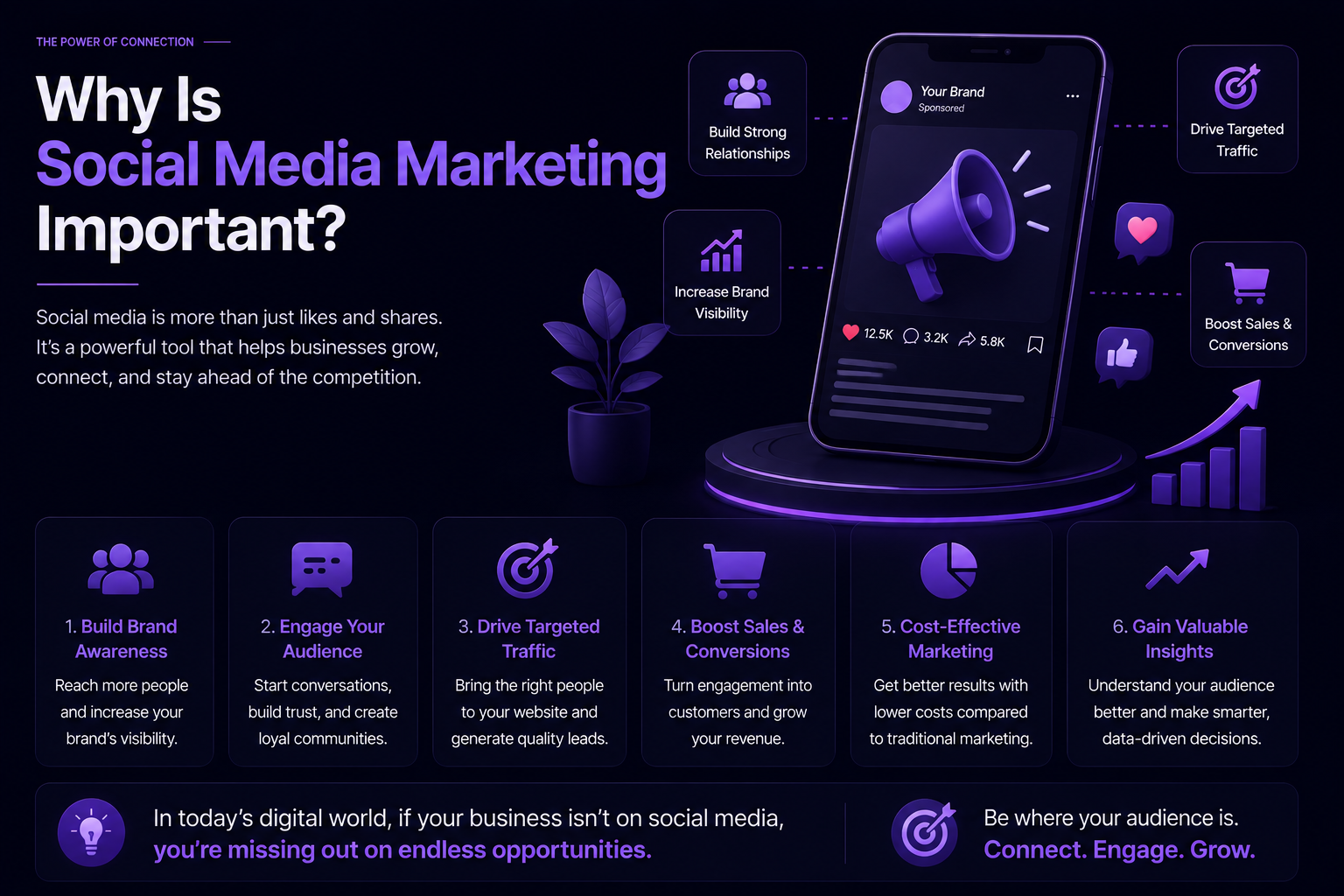
Today, people spend a significant amount of time online and use social platforms to discover brands, research products, watch content, and communicate with businesses.
A strong social media presence can help a business stay visible and competitive.
1. Builds Brand Awareness
Social media gives businesses an opportunity to introduce their brand to a larger audience. Consistent posting and recognizable visual content can help people remember a brand.
For example, a business can use Instagram Reels, Facebook posts, LinkedIn content, or YouTube videos to communicate its brand message.
2. Helps Reach the Target Audience
Social media platforms provide tools that help businesses identify and reach specific audiences based on factors such as interests, demographics, location, and online behavior.
This allows businesses to create content that is more relevant to the people they want to reach.
3. Increases Customer Engagement
Social media is a two-way communication channel.
Businesses can respond to comments, answer questions, conduct polls, collect feedback, and communicate with customers through direct messages.
This interaction can help create stronger relationships between brands and customers.
4. Generates Website Traffic
Social media can also support website traffic generation.
Businesses can share blog posts, product pages, landing pages, services, and other useful resources through their social media profiles.
When users find the content valuable, they may visit the business website to learn more.
5. Supports Lead Generation
Social media marketing can help businesses attract potential customers.
Lead generation campaigns, promotional content, educational posts, forms, and calls-to-action can encourage interested users to take the next step.
Major Social Media Platforms for Marketing
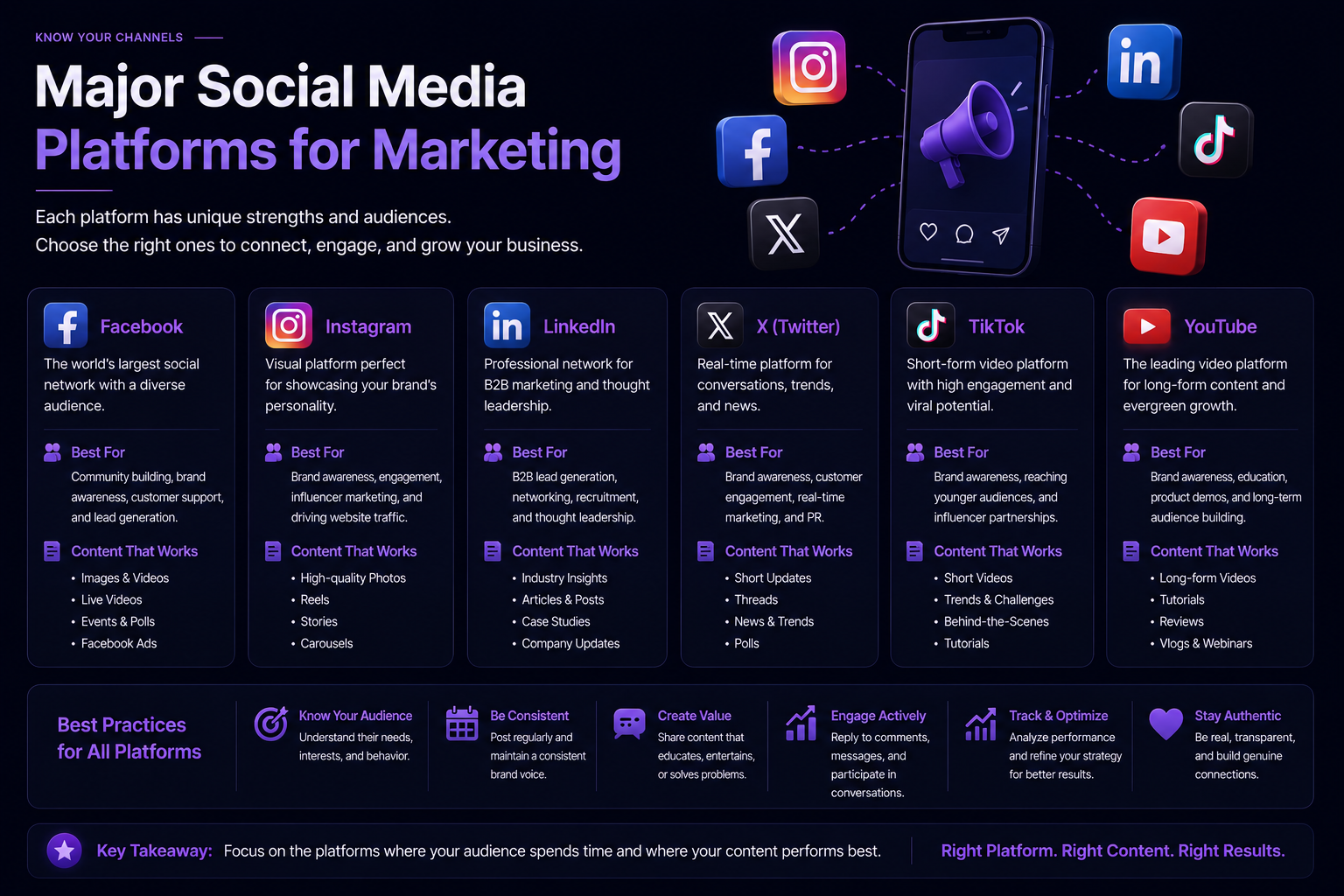
Different platforms attract different audiences and content styles. Businesses should choose platforms based on their goals and target audience rather than trying to use every platform at once.
Instagram is highly focused on visual content. It is useful for brands that can communicate through images, Reels, Stories, carousels, and short-form videos.
Popular Instagram content includes:
- Reels
- Carousels
- Stories
- Educational posts
- Product showcases
- Behind-the-scenes content
Facebook remains useful for businesses that want to build communities, share updates, publish different types of content, and run advertising campaigns.
Local businesses can also use Facebook to communicate with customers and promote offers or events.
LinkedIn is particularly useful for B2B businesses, professionals, agencies, recruiters, and personal brands.
Businesses can share industry insights, case studies, company updates, educational content, and professional experiences.
YouTube
YouTube is ideal for long-form and short-form video content.
Businesses can create tutorials, product demonstrations, educational videos, reviews, interviews, and Shorts to reach audiences through video search and recommendations.
TikTok
TikTok focuses heavily on short-form video and creative content. Brands can use it to showcase products, share educational information, participate in trends, and connect with younger audiences where appropriate.
Important Social Media Marketing Strategies
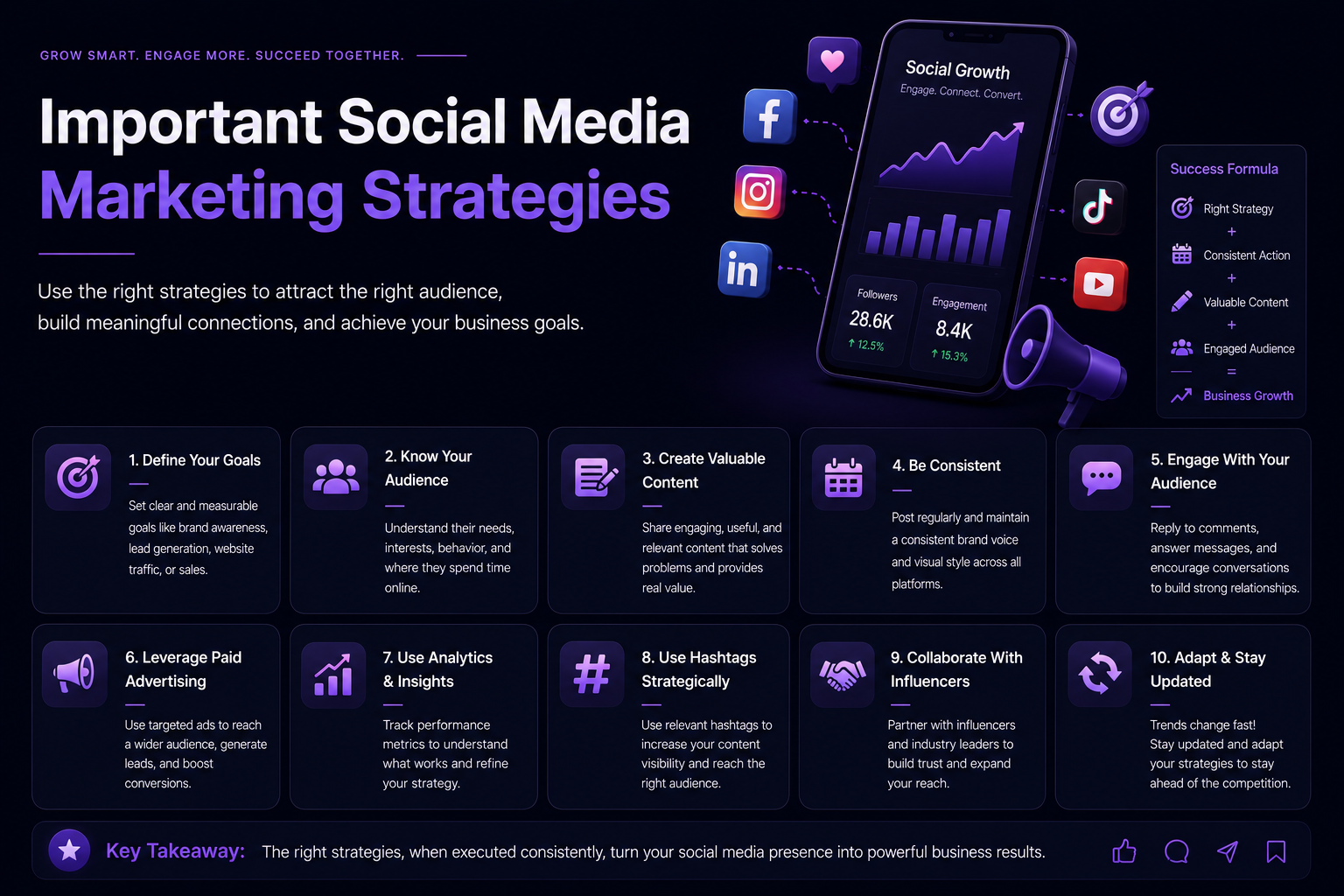
A successful social media presence requires more than posting randomly. A clear strategy helps businesses create consistent and purposeful content.
1. Define Your Goals
Before creating content, determine what you want to achieve.
Your goals could include:
- Increasing brand awareness
- Generating leads
- Increasing website traffic
- Improving engagement
- Promoting products
- Building an online community
- Increasing sales
Clear goals make it easier to measure success.
2. Understand Your Target Audience
Knowing your audience is one of the most important parts of social media marketing.
Consider:
- Who are your ideal customers?
- What problems do they have?
- What type of content do they enjoy?
- Which social platforms do they use?
- What questions do they frequently ask?
When you understand your audience, you can create content that provides genuine value.
3. Create Valuable Content
Good content should educate, entertain, inspire, or solve a problem.
A business can use different content categories, such as:
Educational Content:
Tips, tutorials, guides, and industry information.
Entertaining Content:
Relatable posts, creative videos, and engaging Reels.
Promotional Content:
Products, services, discounts, and offers.
Inspirational Content:
Success stories, customer experiences, and motivational content.
Behind-the-Scenes Content:
Team activities, business processes, and company culture.
A balanced content strategy prevents your social media profile from becoming purely promotional.
4. Maintain Consistency
Consistency is essential for building a recognizable online presence.
Create a content calendar that helps you plan:
- What to post
- When to post
- Which platform to use
- What format to use
- What objective each post supports
Consistency does not necessarily mean posting constantly. It means maintaining a realistic schedule that you can follow.
5. Use Visual Content
Images, videos, carousels, and graphics can make social media content more engaging.
Tools such as Canva can help beginners and businesses create professional-looking social media designs without advanced graphic design skills.
However, visual quality should support useful content rather than replace it.
6. Use Hashtags and Keywords Strategically
Relevant hashtags and keywords can help categorize content and improve discoverability.
Instead of using large numbers of unrelated hashtags, focus on terms that are genuinely connected to your topic, industry, location, and audience.
For example, a digital marketing professional might use relevant terms such as:
- #SocialMediaMarketing
- #DigitalMarketing
- #SocialMediaStrategy
- #ContentMarketing
- #InstagramMarketing
Keyword usage should feel natural and should never make the content difficult to read.
Social Media Advertising
Organic content is only one part of social media marketing. Businesses can also use paid advertising to reach specific audiences.
Social media advertising allows businesses to promote content, products, services, websites, and lead-generation campaigns.
Common advertising objectives include:
- Brand awareness
- Website traffic
- Engagement
- Lead generation
- App promotion
- Conversions
Paid advertising can be particularly useful when a business wants to reach a specific audience or scale a campaign.
Social Media Analytics
One of the biggest advantages of social media marketing is the ability to measure performance.
Important metrics include:
Reach
Reach shows how many unique users saw your content.
Impressions
Impressions represent the number of times content was displayed.
Engagement
Engagement can include likes, comments, shares, saves, clicks, and other interactions.
Engagement Rate
Engagement rate helps businesses understand how actively audiences interact with content relative to the size of the audience or number of impressions.
Click-Through Rate
CTR measures how frequently users click a link or call-to-action after seeing content.
Conversions
Conversions represent valuable actions such as completing a form, making a purchase, signing up, or contacting a business.
Analytics help marketers understand what works and what needs improvement.
Common Social Media Marketing Mistakes
Businesses and beginners often make several mistakes when starting social media marketing.
Posting Without a Strategy
Random posts without a clear objective can make it difficult to build a consistent brand.
Focusing Only on Promotion
If every post asks customers to buy something, audiences may lose interest.
A good strategy combines promotional content with useful and engaging information.
Ignoring Comments and Messages
Social media is about communication. Ignoring customers can create a poor experience.
Copying Competitors
Competitor research is useful, but businesses should develop their own voice and content style.
Not Measuring Results
Without analytics, it becomes difficult to know which content and campaigns are actually working.
How Beginners Can Start Social Media Marketing
If you are new to social media marketing, you do not need to master everything immediately.
Start with these steps:
Step 1: Choose one or two platforms.
Focus on platforms where your target audience is active.
Step 2: Define your audience.
Understand their interests, problems, and needs.
Step 3: Set clear goals.
Decide what you want your social media presence to achieve.
Step 4: Create a content plan.
Prepare different content categories and create a simple posting schedule.
Step 5: Create quality content.
Use images, videos, carousels, and educational posts that provide value.
Step 6: Engage with your audience.
Reply to comments and messages and encourage meaningful conversations.
Step 7: Analyze your results.
Check your analytics regularly and identify your best-performing content.
Step 8: Improve your strategy.
Use the data you collect to make better content and campaign decisions.
The Future of Social Media Marketing
Social media marketing continues to evolve as technology and user behavior change.https://blog.hubspot.com/marketing/social-media-future
Artificial intelligence, short-form video, social commerce, personalization, influencer marketing, and data-driven strategies are becoming increasingly important.
AI tools can help marketers with brainstorming, content ideas, research, and workflow automation. However, human creativity, authenticity, strategy, and understanding of the audience remain essential.
The future of social media marketing will likely focus more on meaningful connections, personalized experiences, useful content, and measurable business outcomes.
Final Thoughts
Social Media Marketing has become an important part of modern digital marketing. It allows businesses to build awareness, connect with customers, share valuable content, generate leads, and grow their online presence.
Success does not come from simply posting every day. It comes from understanding your audience, creating valuable content, maintaining consistency, engaging with people, analyzing performance, and continuously improving your strategy.
Whether you are a beginner, freelancer, startup, local business, or established company, a well-planned social media marketing strategy can help you build a stronger digital presence and create long-term opportunities for growth.
The key is simple: understand your audience, create valuable content, stay consistent, measure your results, and keep learning.
Author: Muhammed Faheem