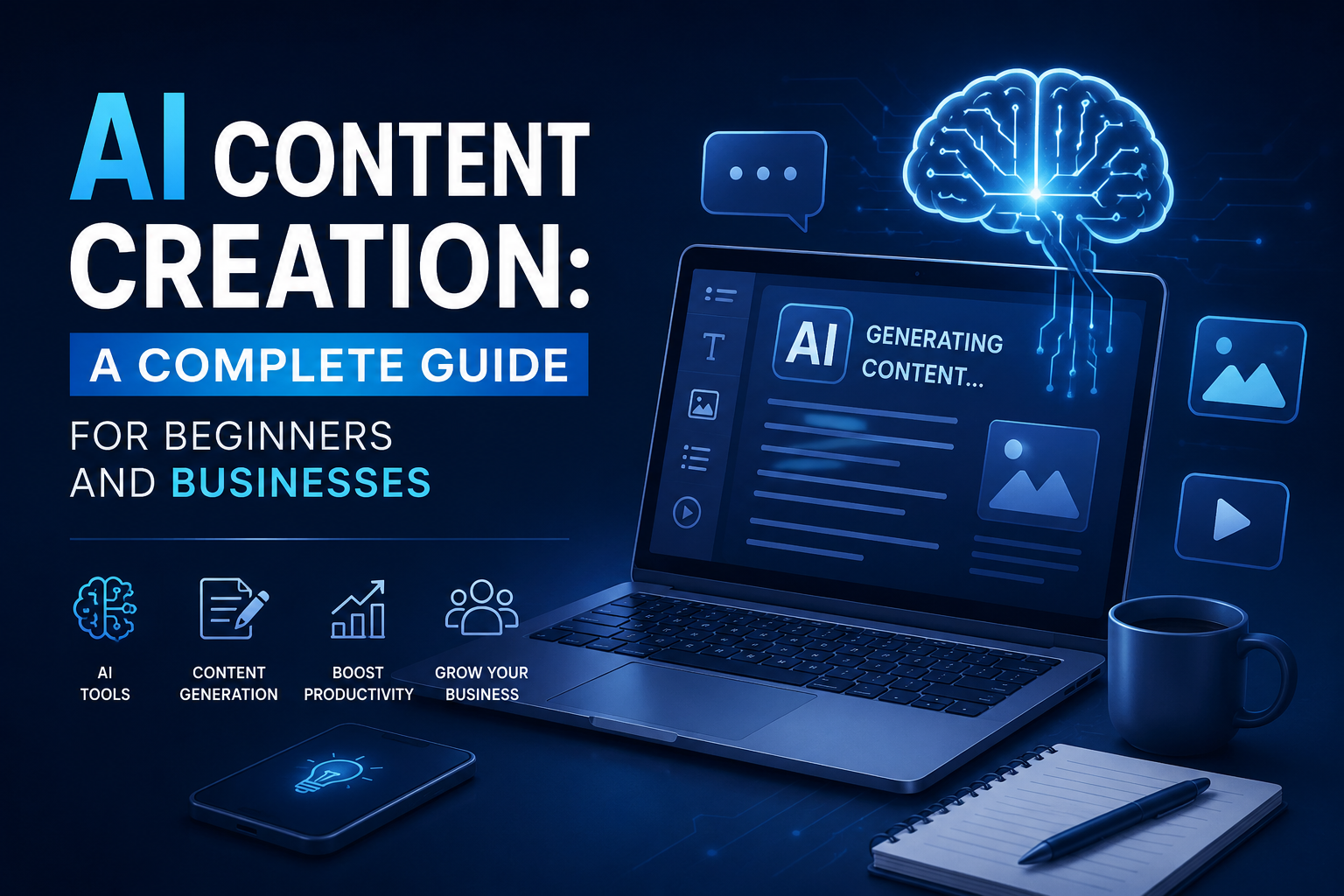
Introduction
Content is one of the most important elements of digital marketing. Businesses use blog posts, social media content, videos, emails, advertisements, product descriptions, and website copy to attract and communicate with their target audience. However, creating high-quality content consistently can take a lot of time, effort, and creativity.
This is where AI Content Creation has become increasingly useful.
AI-powered content creation tools can help marketers, businesses, bloggers, and creators brainstorm ideas, create drafts, generate visuals, improve writing, and organize content strategies. Instead of spending hours completing repetitive tasks, marketers can use artificial intelligence to speed up parts of their workflow.
However, AI is not simply a replacement for human content creators. The best results come from combining AI technology with human creativity, experience, strategic thinking, editing, and fact-checking.
In this complete guide, we will explore what AI Content Creation means, how it works, its benefits, different types of AI-generated content, common applications, challenges, best practices, and the future of AI in content marketing.
What Is AI Content Creation?
AI Content Creation refers to the use of artificial intelligence technologies to assist in creating different types of digital content.
AI tools can process instructions and generate content based on the information, context, and requirements provided by the user. Depending on the tool, AI can help create or improve:
- Blog articles
- Social media posts
- Website content
- Email campaigns
- Advertisements
- Product descriptions
- Video scripts
- Images
- Content ideas
- Headlines
- Meta descriptions
- Marketing copy
For example, a digital marketer planning an Instagram campaign can use AI to generate several content ideas. The marketer can then select the most relevant ideas, add their own knowledge, edit the content, and publish the final version.
This makes AI a useful assistant throughout the content creation process.
How Does AI Content Creation Work?
AI content creation generally begins with an instruction or prompt.
The user provides information about what they want to create, the target audience, the topic, the tone, and other requirements. The AI system processes these instructions and generates an output.
For example, a user could ask an AI tool:
“Create five social media content ideas for a small business that wants to promote its digital marketing services.”
The AI may generate several possible topics, captions, or campaign concepts.
The user can then refine the instructions and request changes such as:
- Make it shorter
- Make it more professional
- Add a strong headline
- Make it suitable for beginners
- Add a call to action
- Convert it into an Instagram caption
This process allows marketers to move quickly from an initial idea to a usable content draft.
Why Is AI Content Creation Important?
The demand for digital content continues to grow. Businesses need to maintain websites, social media accounts, email campaigns, advertisements, and other digital channels.
Creating all this content manually can be challenging, especially for small marketing teams.
AI can help reduce the time spent on repetitive tasks and allow marketers to focus more on strategy and creativity.
Faster Content Production
One of the biggest advantages of AI is speed. AI can generate ideas, outlines, and initial drafts much faster than many traditional workflows.
This does not mean the final content should be published without review. Instead, AI can help create a starting point that a human can improve.
More Content Ideas
Coming up with new ideas regularly can be difficult. AI can help generate topic suggestions based on a specific industry, audience, or marketing goal.
For example, a digital marketing business could ask AI for blog topics related to SEO, social media marketing, email marketing, content marketing, and online advertising.
Improved Productivity
AI can help reduce repetitive work. Marketers can use the time saved to focus on campaign strategy, audience research, creative decisions, and performance analysis.
Content Repurposing
AI can also help transform one piece of content into multiple formats.
For example:
Blog → LinkedIn Post → Instagram Caption → Email Newsletter → Short Video Script
This makes content repurposing easier and can help businesses maintain a consistent presence across different platforms.
Types of AI Content Creation
AI can support many different types of content.
1. AI Blog Content
AI writing tools can help marketers create:
- Blog ideas
- Article outlines
- Introductions
- FAQs
- Headline ideas
- Meta descriptions
- First drafts
However, human editing is important because AI-generated content may contain inaccurate information or lack a unique perspective.
2. AI Social Media Content
Social media requires frequent content. AI can help generate:
- Instagram captions
- LinkedIn posts
- Facebook content
- Content ideas
- Short-form video concepts
- Social media calendars
- Calls to action
A marketer can provide the target audience and brand tone and ask AI to create different content variations.
3. AI Image Creation
AI-powered image generation tools can create visual concepts from text instructions.
These tools can assist with:
- Social media graphics
- Marketing concepts
- Blog illustrations
- Creative campaigns
- Presentation visuals
- Background concepts
Businesses should still consider brand consistency and ensure that the visuals they use are appropriate for their intended purpose.
4. AI Video Content
AI can support video production by helping with:
- Video ideas
- Scripts
- Storyboards
- Captions
- Subtitles
- Editing assistance
- Short-form video concepts
This can be especially useful for marketers creating content for platforms focused on short videos.
5. AI Email Content
Email marketers can use AI to generate:
- Subject lines
- Newsletter ideas
- Promotional email drafts
- Welcome emails
- Product announcements
- Calls to action
Human review is essential before sending marketing emails to customers.
6. AI Advertising Content
AI can help generate different versions of advertising copy, headlines, descriptions, and calls to action.
Marketers can test these variations and use performance data to identify which messages are most effective.
Benefits of AI Content Creation for Businesses
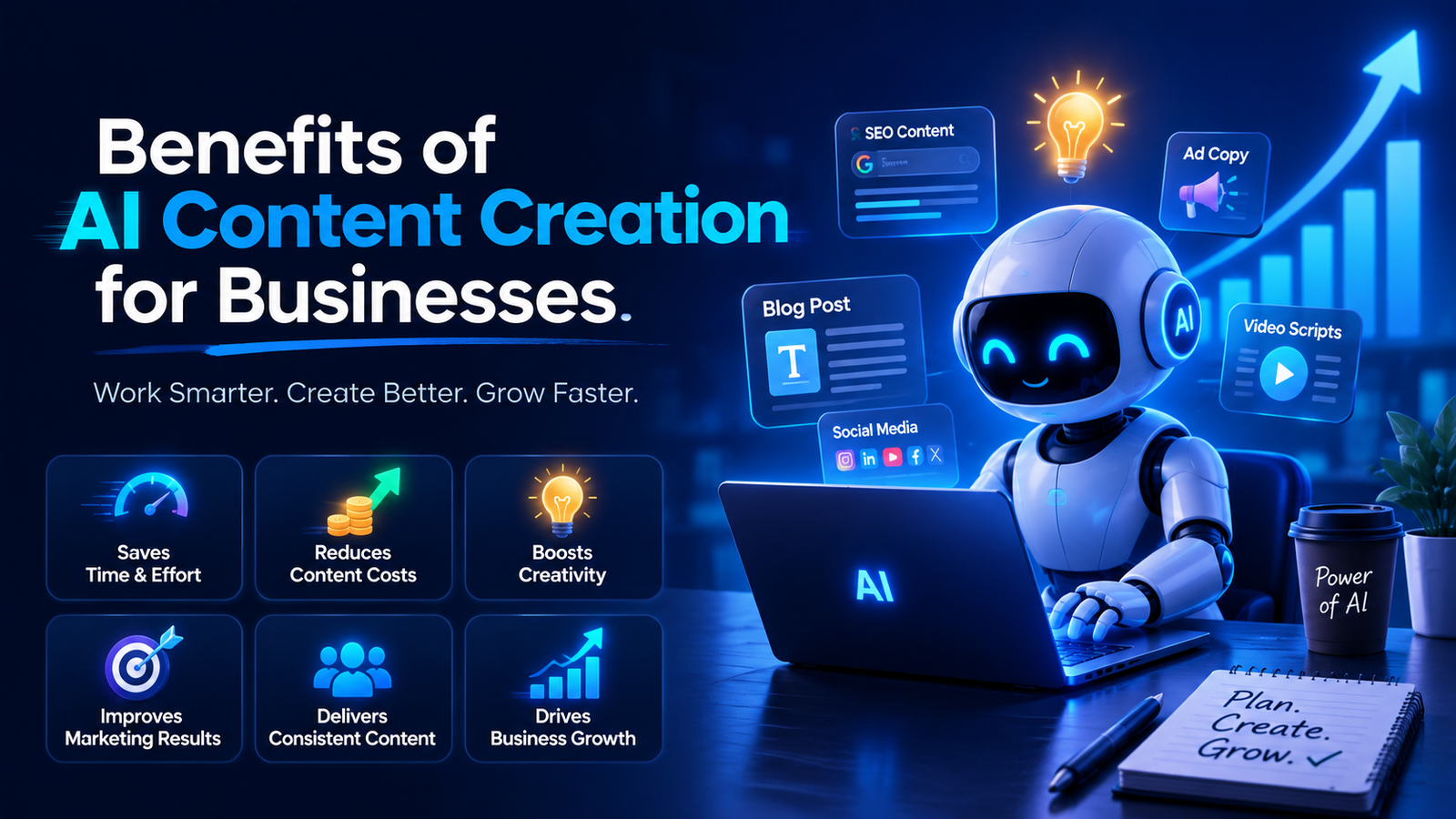
AI Content Creation can provide several benefits when used correctly.
1. Saves Time
AI can handle many repetitive tasks quickly. This allows marketers to spend more time on strategy and creative decisions.
2. Reduces Repetitive Work
Tasks such as generating content ideas, rewriting sentences, summarizing information, or creating variations can be supported by AI.
3. Supports Small Businesses
Small businesses may not have large marketing teams. AI can help them manage certain content tasks more efficiently.
4. Improves Content Consistency
Businesses that publish content regularly can use AI to help maintain a consistent workflow.
5. Supports Multiple Platforms
A single marketing idea can be adapted into different formats for different channels.
6. Helps With Brainstorming
AI can provide multiple ideas quickly, giving marketers more creative directions to explore.
7. Enables Content Scalability
Businesses with larger content requirements can use AI to assist with repetitive production tasks while human teams focus on quality and strategy.
AI Content Creation for Digital Marketing
AI is becoming an important supporting technology in digital marketing.
Digital marketers can use AI throughout the marketing process.https://www.jasper.ai/blog/ai-content-creation
SEO
AI can assist with:
- Keyword ideas
- Content outlines
- Search intent research
- FAQ ideas
- Meta descriptions
- Title suggestions
However, SEO success depends on creating useful content that satisfies the audience’s search intent. AI-generated text alone does not guarantee search visibility.
Social Media Marketing
AI can help create content ideas, captions, campaign concepts, and posting variations.
Email Marketing
AI can assist with subject lines, email drafts, personalization ideas, and campaign concepts.
Content Marketing
AI can support content research, brainstorming, outlining, drafting, repurposing, and editing.
Paid Advertising
AI can help marketers create different versions of ad copy and messaging for testing.
AI Content Creation and SEO
AI and SEO can work together when used strategically.
A marketer can use AI to brainstorm topics around a target keyword such as AI Content Creation. The marketer can then research the topic, understand search intent, add original insights, and create a useful article.
Important SEO practices include:
- Use keywords naturally
- Create helpful content
- Organize content with headings
- Answer relevant questions
- Write for the audience first
- Avoid unnecessary keyword repetition
- Add original insights
- Review facts carefully
- Optimize titles and meta descriptions
The focus keyword should appear naturally in important areas such as the title, introduction, headings where appropriate, and body content.
Challenges of AI Content Creation
Despite its advantages, AI Content Creation also has limitations.
Accuracy
AI systems can sometimes produce incorrect information. Important facts, statistics, technical details, and claims should be verified.
Lack of Original Perspective
AI can generate useful content, but it may not have the personal experiences or unique perspective that a human expert can provide.
Generic Writing
If AI-generated content is used without editing, it can sometimes sound repetitive or generic.
Brand Voice
Every business has its own personality and communication style. AI output may need editing to match a specific brand voice.
Overdependence on AI
Using AI for every creative decision can reduce human involvement. AI should support creativity rather than eliminate it.
Privacy and Confidentiality
Businesses should be careful about entering confidential, private, or sensitive information into AI tools. Organizations should establish clear policies for responsible AI use.
Best Practices for AI Content Creation
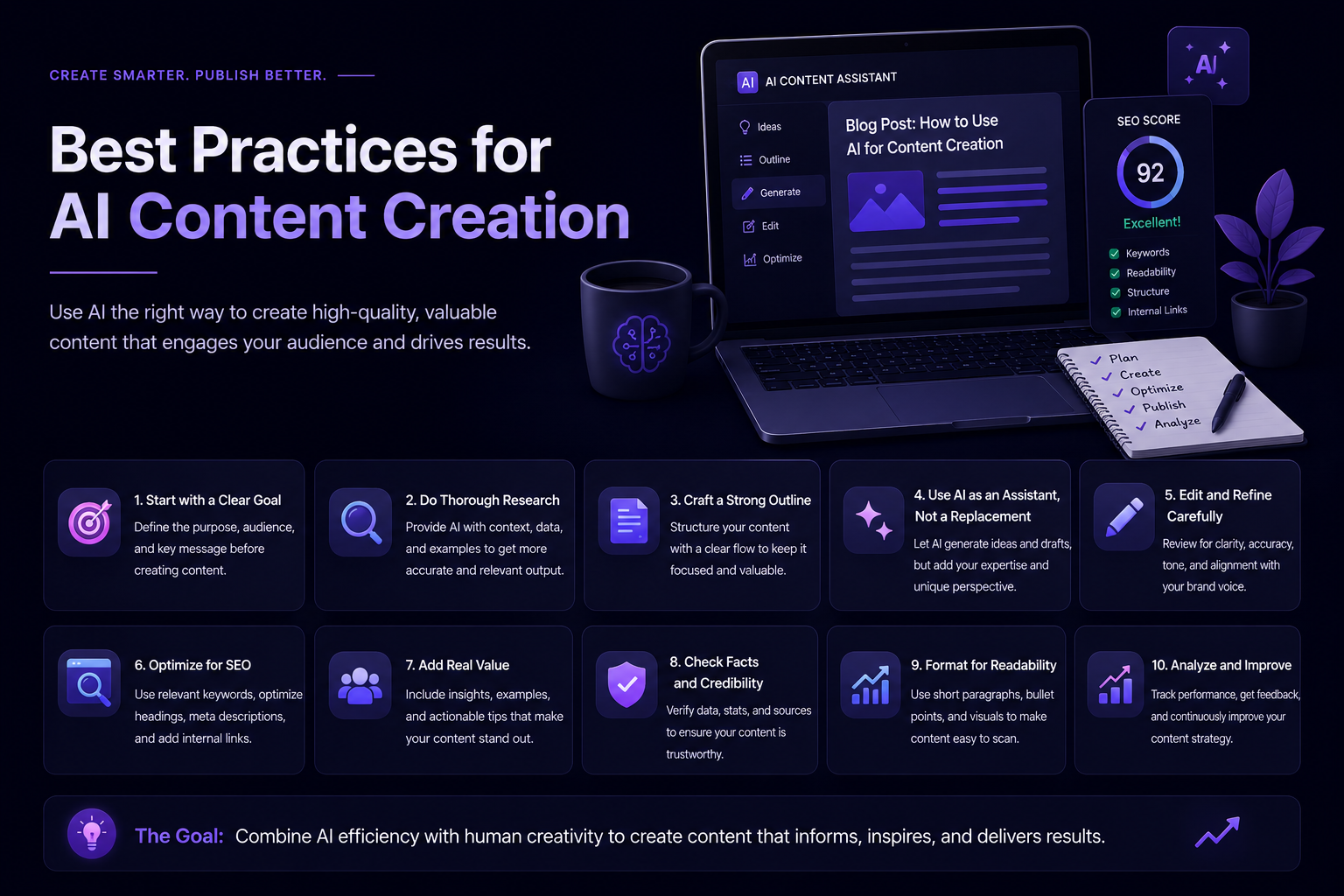
To get better results from AI, marketers should follow a structured process.
1. Write Clear Prompts
Clear instructions generally produce more useful results.
Instead of asking:
“Write about digital marketing.”
Provide more context:
“Write a beginner-friendly blog introduction about digital marketing for small businesses using a professional and simple tone.”
2. Define Your Audience
Tell the AI who the content is for.
For example:
- Beginners
- Small business owners
- Digital marketers
- Students
- E-commerce businesses
This can help make the content more relevant.
3. Provide a Tone
Specify whether you want the content to sound:
- Professional
- Friendly
- Educational
- Simple
- Conversational
- Persuasive
4. Always Review AI Output
Do not automatically publish AI-generated content. Review it for accuracy, clarity, originality, grammar, and relevance.
5. Add Human Experience
Add examples, opinions, case studies, observations, and industry knowledge that make the content more valuable.
6. Fact-Check Important Information
Verify statistics, dates, technical claims, product information, and other important details.
7. Maintain Your Brand Voice
Create consistent guidelines for your brand’s language, style, tone, and messaging.
AI Content Creation vs Traditional Content Creation
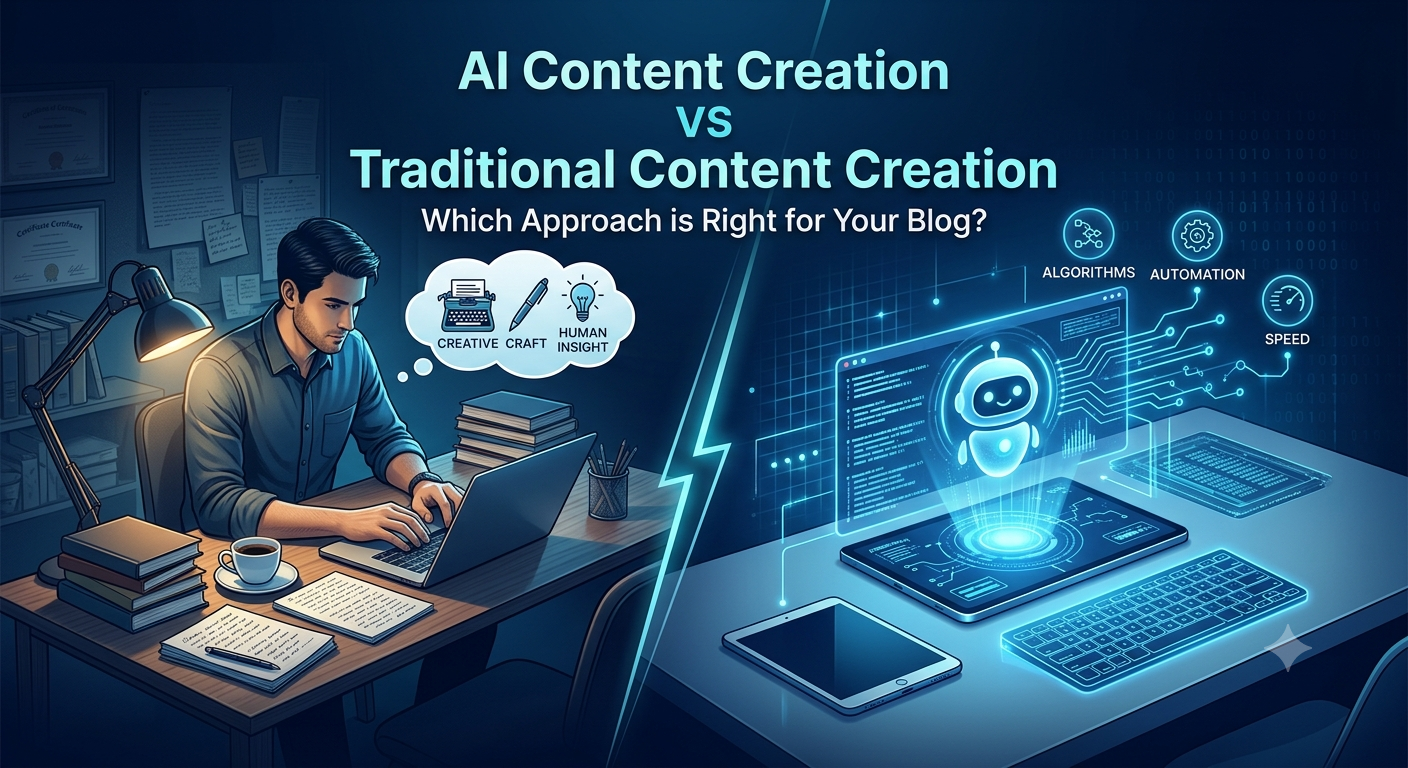
Traditional content creation usually involves brainstorming, research, writing, editing, designing, and publishing manually.
AI-assisted content creation can speed up several of these steps.
However, AI should not necessarily replace traditional creative processes.
A strong workflow can combine both approaches:
Research → Human Strategy → AI Assistance → Human Editing → Fact Checking → Final Content → Publishing
This approach combines the efficiency of AI with human creativity and expertise.
How to Use AI Without Losing Creativity
One concern about AI Content Creation is that businesses may become too dependent on automated tools.
The solution is to use AI as a creative assistant.
For example, instead of asking AI to completely write an article, a marketer can first create their own ideas and structure. AI can then help improve the outline, suggest missing points, or create alternative versions.
This keeps human creativity at the center of the process.
The goal should not be to create the largest possible amount of content. The goal should be to create useful, relevant, original, and valuable content.
The Future of AI Content Creation
The future of AI Content Creation is likely to involve more advanced tools for text, images, video, audio, personalization, and automation.
Businesses may increasingly use AI to create personalized experiences for different customer groups. AI may also become more deeply integrated into content management systems, advertising platforms, analytics tools, and marketing workflows.
However, human expertise will continue to matter.
Technology can help generate content, but humans provide context, creativity, judgment, experience, and emotional understanding.
Businesses that successfully combine AI technology with human expertise will be better positioned to build efficient and effective content strategies.
Conclusion
AI Content Creation is transforming the way businesses, marketers, bloggers, and creators approach digital content.
From blog writing and social media posts to images, videos, emails, and advertisements, AI can support many stages of the content creation process. It can save time, generate ideas, improve productivity, and make content workflows more scalable.
However, AI should not be treated as a complete replacement for human creativity. Accuracy, originality, brand voice, strategy, and audience understanding remain essential.
The most effective approach is to use AI as a content creation assistant rather than relying on it completely.
By combining artificial intelligence with human creativity, research, editing, and strategic thinking, businesses can create better content more efficiently while continuing to provide real value to their audiences.
AI Content Creation is not just about creating content faster—it is about using technology intelligently to make the entire content creation process more efficient, creative, and strategic.
Author:Muhammed Faheem